From Cell to Container :
Building the Future of Battery Energy Storage
India’s energy landscape is changing rapidly. As the country continues to expand its solar and wind capacity, the focus is shifting from simply generating renewable energy to ensuring that this energy can be stored, managed and delivered when it is needed.
This is where Battery Energy Storage Systems (BESS) are becoming increasingly important.
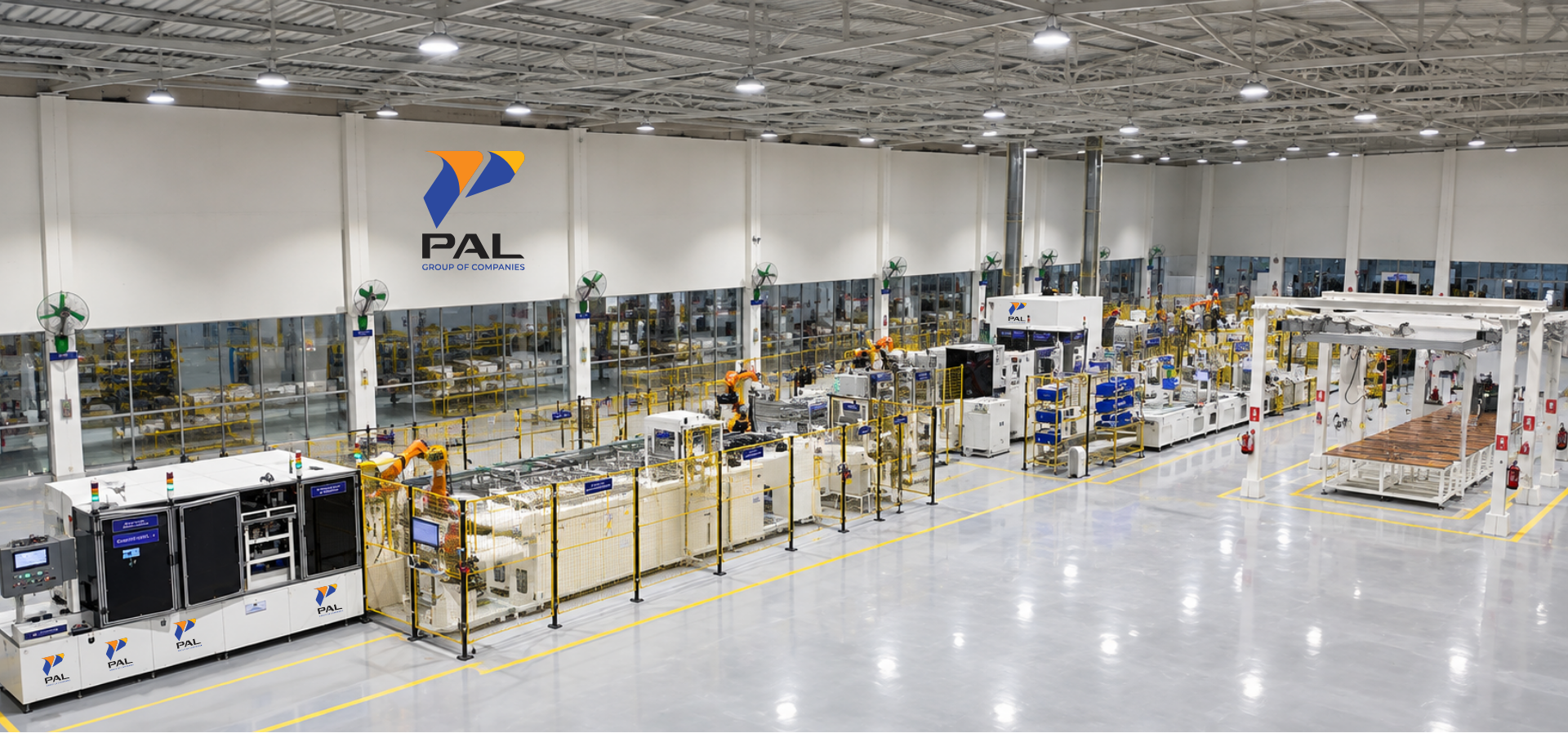
At Patil Automation Limited (PAL), we work with BESS manufacturers to automate the journey from battery cell to complete storage system bringing together assembly, robotics, inspection, testing and traceability to support scalable and reliable BESS manufacturing.
But why is energy storage necessary in the first place?
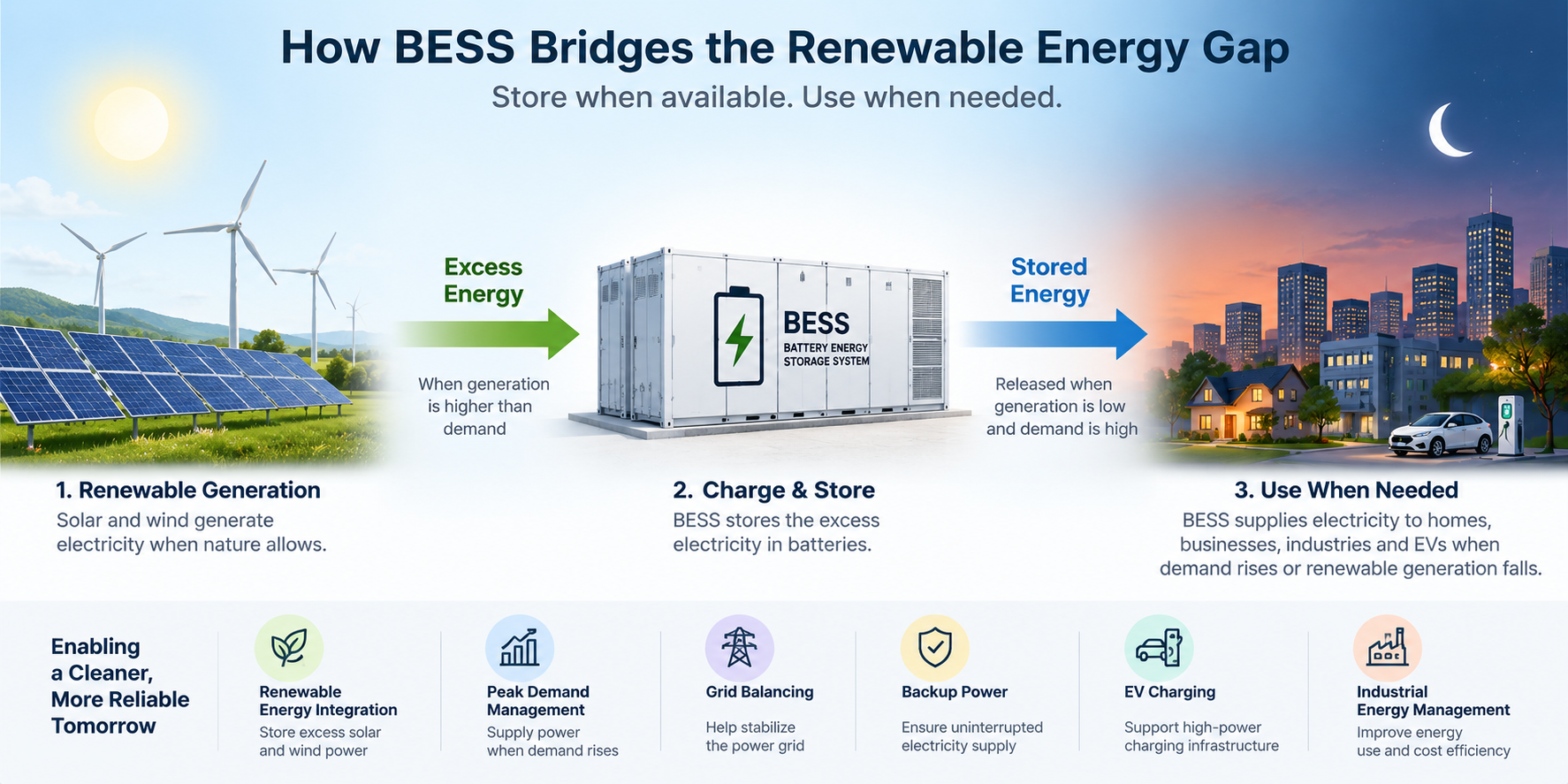
Solar power is generated when the sun is shining, while electricity demand continues throughout the day and night. Wind generation can also vary with weather conditions. This creates a fundamental challenge: renewable energy may be available when demand is low, and demand may rise when renewable generation is low.
BESS helps bridge this gap.
In simple terms, a BESS stores electricity when it is available and releases it when it is needed—acting as a large, rechargeable energy reservoir.
Store when available. Use when needed.
Where Can BESS Be Used?
BESS can support a wide range of applications, including:
A Market That Is Scaling Rapidly
The need for energy storage is growing alongside India’s renewable-energy ambitions.
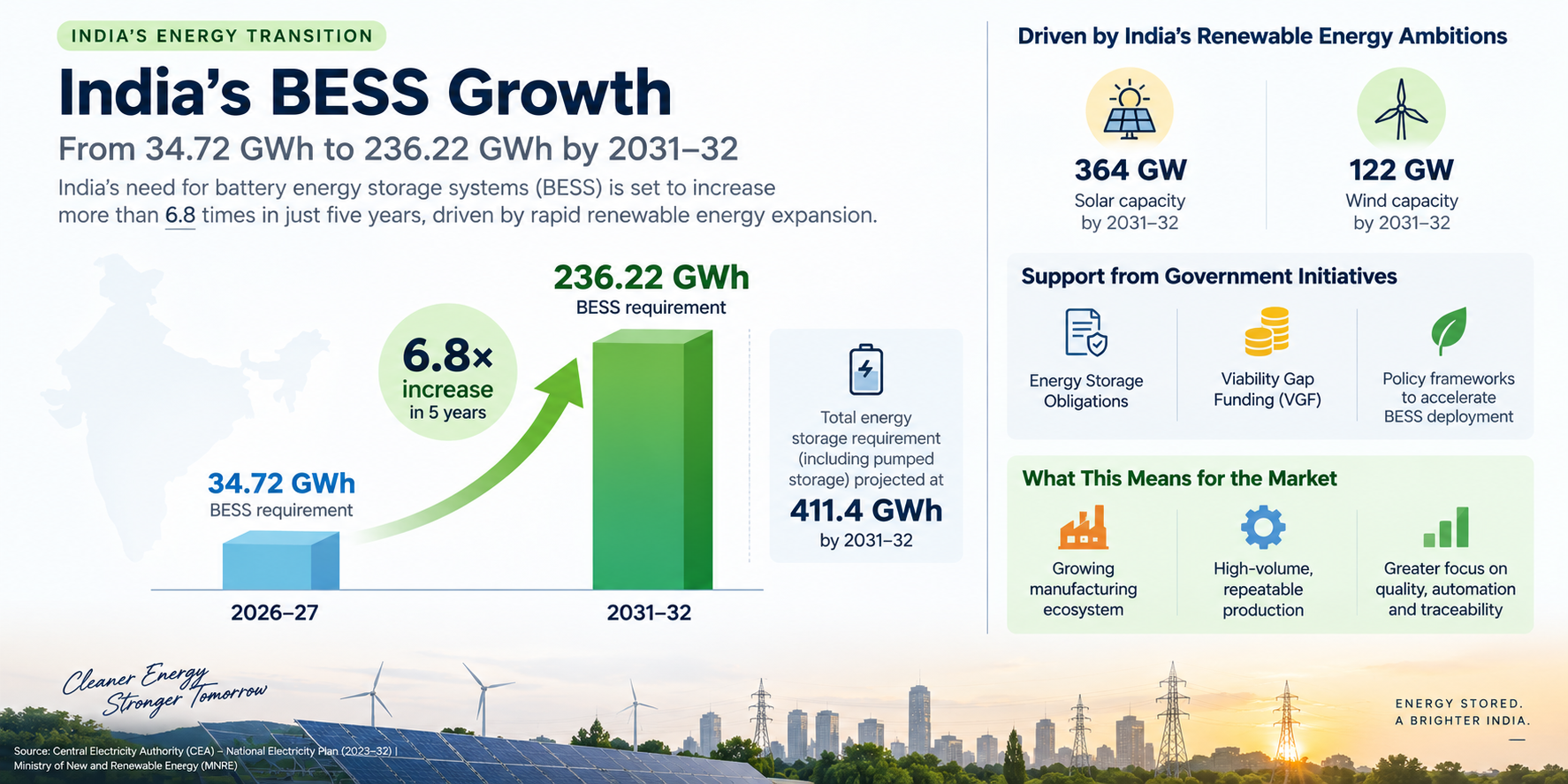
According to the Central Electricity Authority’s National Electricity Plan, India’s BESS storage requirement is projected to increase from 34.72 GWh in 2026–27 to 236.22 GWh by 2031–32—an increase of more than 6.8 times in five years.
The broader energy-storage requirement, including pumped storage, is projected to reach 411.4 GWh by 2031–32. The government has also introduced mechanisms such as Energy Storage Obligations and Viability Gap Funding to support the development and deployment of energy storage.
This scale of growth points to more than an increase in BESS installations. It signals the emergence of a much larger energy-storage manufacturing ecosystem.
For manufacturers, the question therefore becomes:
How do we build BESS systems at this scale while maintaining quality, consistency and traceability?
What Does It Take to Manufacture BESS at Scale?
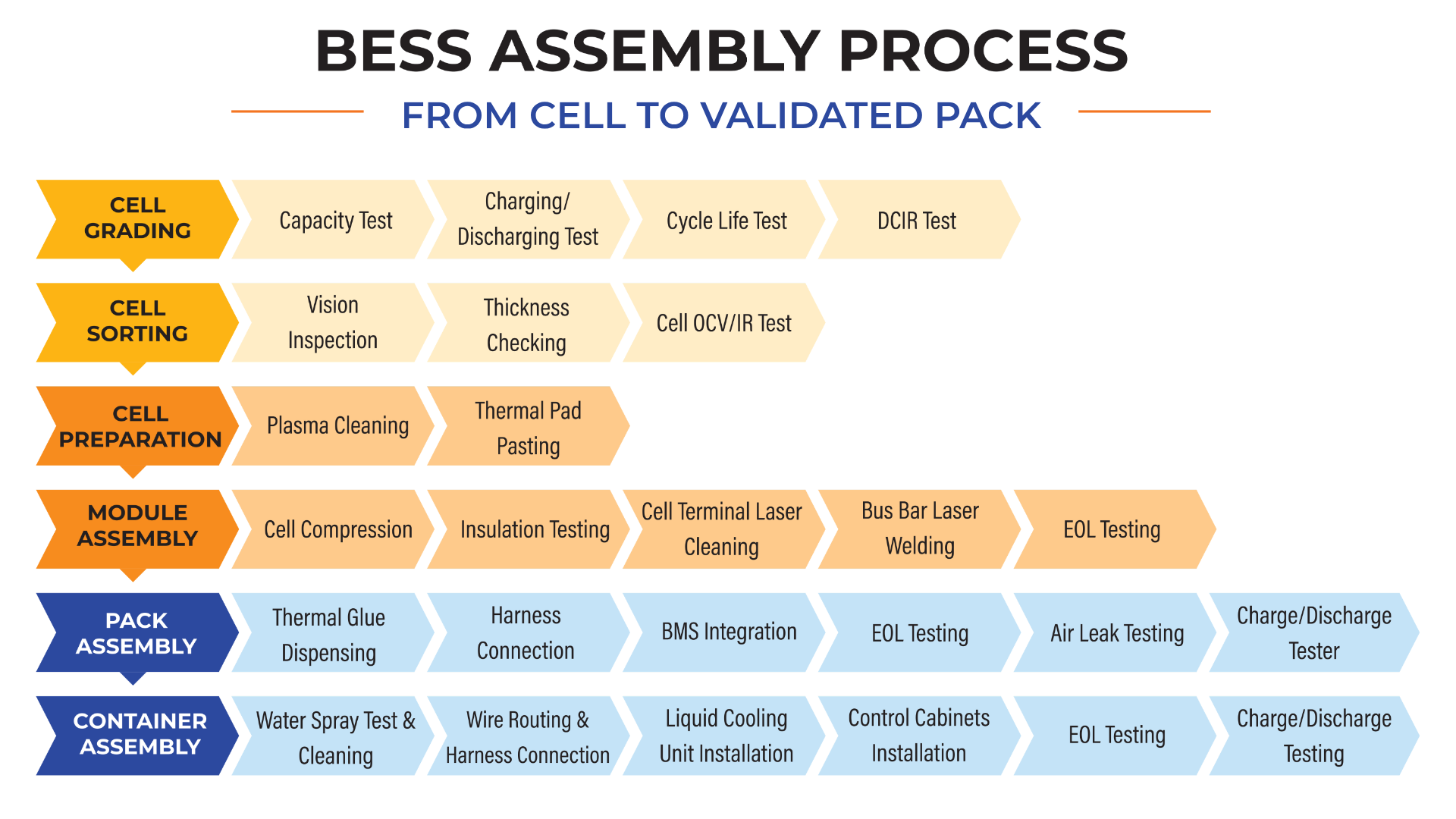
A BESS is not a single component. It is a system built through multiple stages of assembly and integration.
The journey begins with individual battery cells.
Cells are inspected and assembled into modules. Modules are integrated into battery packs, which can then be assembled into racks and complete BESS containers along with the required electrical, thermal, control and safety systems.
At each stage, processes such as material handling, assembly, welding, inspection, testing and data capture need to work together.
Why Automation Matters
As BESS production scales, manufacturing needs to move beyond simply adding more manual operations.
Automation can help manufacturers achieve:
- Higher throughput
- Repeatable processes
- Precision in critical operations
- Consistent quality
- Integrated inspection and testing
- Real-time process data
- End-to-end traceability
- Efficient material movement
The goal is not automation for its own sake. The goal is to create a connected manufacturing flow where critical processes are controlled, production data is captured and every battery can be traced through its manufacturing journey.
This is where Patil Automation Limited brings its expertise.
PAL develops automation solutions across the BESS manufacturing journey, including cell processing, module and pack assembly, robotic handling, laser welding, inspection, testing, traceability and automated material movement.
These capabilities can be integrated into a connected manufacturing ecosystem, helping BESS manufacturers scale production while maintaining process control and consistency.
BESS Assembly Line – Delivered by PAL